
Evan Burkeen: How Debate Prepared Me for Yale
“I don’t just want to learn policy, I want to shape it. Debate gave me a sense of both the stakes and the levers of change.”
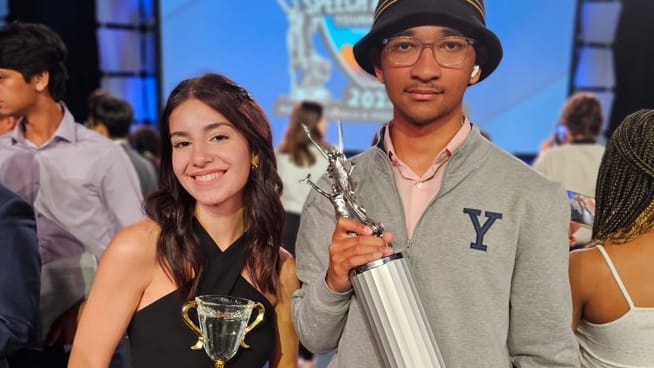
Few extracurriculars prepare students for the intensity of college like speech and debate. For one of our alumni, the transition from high school competition to the halls of Yale was shaped every step of the way by Public Forum and Lincoln-Douglas debate. In this interview, they reflect on how debate informed their college applications, prepared them for academic rigor as a Political Science major, and inspired a long-term commitment to public service and policy.
- You go to Yale! Congratulations. How did your experience in Public Forum and Lincoln-Douglas debate shape your approach to the college application process, particularly in crafting your personal statement or preparing for interviews?
Debate was a huge part of my application because it was a huge part of my high school career. I think about it in two ways: how I used debate in the process, and how it helped me more broadly. On the first front, I mentioned debate in some form in nearly every application. But I was intentional about balance: I didn’t want to come off as just the debate kid, but I also didn’t want to downplay something that had shaped me so deeply. So I wrote about it in ways that emphasized personal growth, what it taught me about leadership, intellectual curiosity, and resilience, rather than just listing wins or name-dropping tournaments. On the second front, debate made me a much more effective communicator, especially a better listener. That helped me build rapport with interviewers and have real, human conversations instead of rehearsed Q&As. That connection often made the difference.
- In what ways did debate prepare you for the academic demands of an Ivy League education, especially as a Political Science major?
The amount of research you do in debate can sometimes dwarf the workload in college classes. The pace of prepping cases, digging through academic journals, and staying updated on current events made me comfortable with information overload, which is half the battle in college. Debate also introduced me to a wide range of domestic and international policy issues, which gave me a real head start. I once took a course with a professor I had cited in debate rounds multiple times. That doesn’t mean I walked in knowing everything; in fact, class forced me to unlearn some oversimplifications, but it freed me up to ask more complex questions because I already knew the basics. That foundation helped me transition faster into higher-level academic work.
- What would you say is the most underrated benefit of participating in debate throughout high school?
The network, hands down. Debate introduces you to people from all over the country who are driven, curious, and often end up doing interesting things later on. I’ve seen people at college events and immediately connected with them because we had debated each other years earlier. I’ve found places to stay while traveling, gotten career advice, and built friendships that extend beyond competition. It’s a quiet benefit, but a lasting one.
- How did your debate experiences influence your interest in political science and your long-term career goals?
I’ve always been interested in political science, but debate sharpened that interest and made it actionable. It pushed me to engage not just with abstract theory but with real-world policy implications. For instance, I came into high school with a general interest in government, but after researching topics like the federal welfare system, education funding, and healthcare access, I started to understand the complexities and tradeoffs policymakers face. That shaped the way I now approach both coursework and my future. I don’t just want to learn policy; I want to shape it. Debate gave me a sense of both the stakes and the levers of change.
- What’s one piece of advice you’d give to someone just starting out in debate?
You’re not as good as you think you are, and that’s okay. Debate rewards humility and hard work more than raw talent. Take time to watch rounds, dig deep into your research, and revise your arguments constantly. But also, don’t let winning define your experience. The real value of debate is what it teaches you about thinking clearly, speaking confidently, and listening actively. And you’ll meet some of your closest friends along the way. Focus on that, and the wins will come as a byproduct.
More Articles

Kate Liu: Finding Your Voice Beyond the Round
"Extemp is a particularly tricky activity to achieve equity"

Danielle Pacia: Speech and Yale Law
"Making reading a habit is the best way to develop your communication, writing, and argumentation skills"

You Are Not the Florida Panthers
"Every debater has different strengths"